Heatwave response · Mirpur, Dhaka From the Hashi Ekshathe field archive
01 / Journey & leadership
From a few friends to a shared effort.
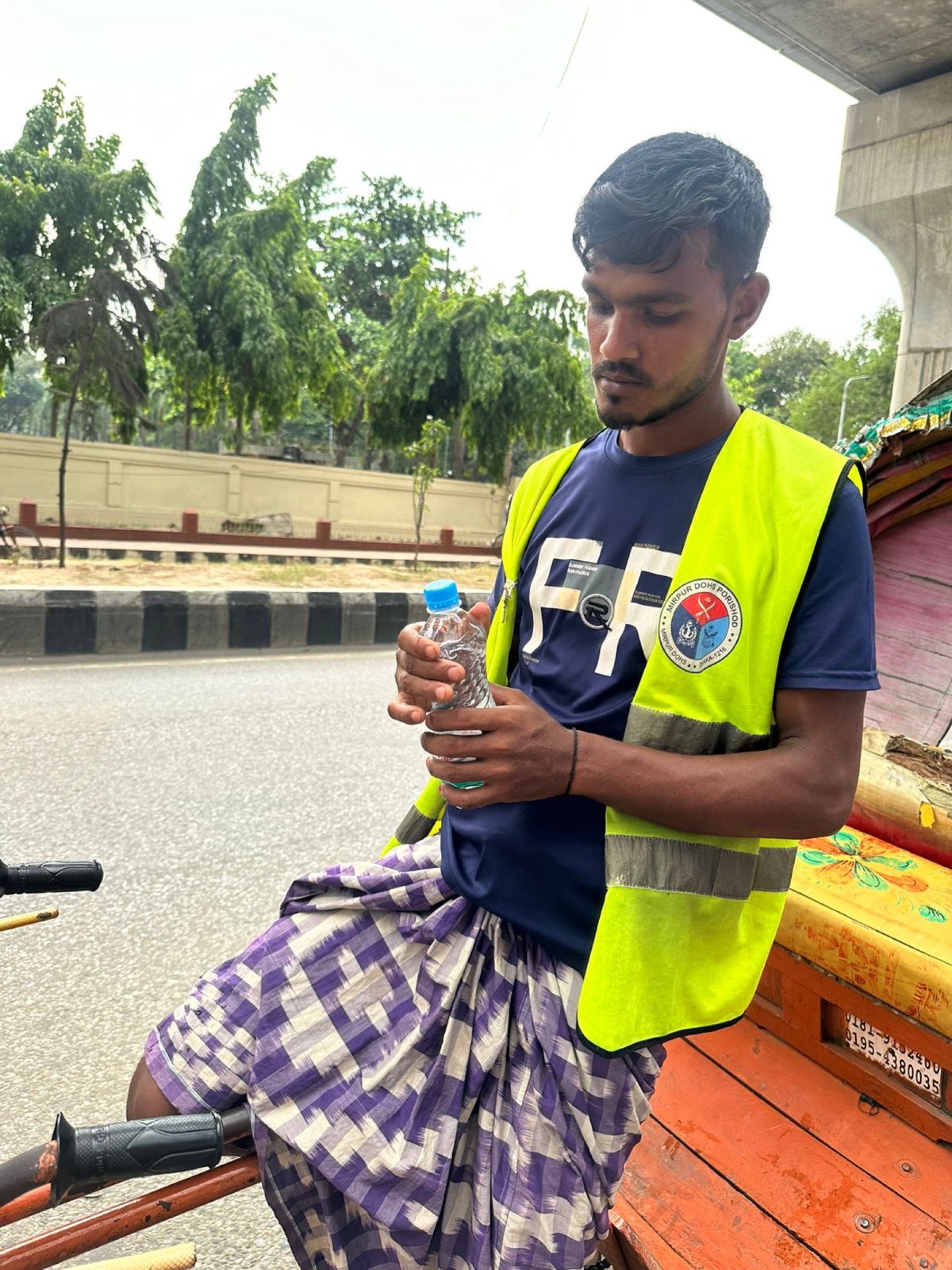
In April 2024, a heatwave shut Dhaka's schools. In Mirpur I watched outdoor workers stand in forty-degree heat without water while everyone with a choice stayed indoors. I wanted young people to act, not just post. That May, a few friends and I handed out drinking water, and Hashi Ekshathe (“Smile Together”) began.
I am now its Co-Founder and Executive Director, leading 200+ volunteers, 20+ core members and eight divisional representatives. We have raised and mobilized BDT 600,000+, reached 3,000+ people and documented 13 initiatives: flood, heatwave, winter and fire response, food packages, education kits, and a blood-donation directory that reached 13,751 accounts.
200+Volunteers
8Divisional representatives
13Documented initiatives
3,000+People reached · organization estimate
02 / SDG connections
One thread. Across the goals.
These connections describe how I understand my work’s contribution to the goals. Each card leads to the project behind it.
Personal SDG mapping, not a claim of UN endorsement. Organization-wide estimates and social-media reach are distinct from verified project outcomes.
Across my other work
The same questions, in different places.
As President of the Notre Dame Nature Study Club, I conceived EcoSpark, an ocean-science initiative for the UN Decade of Ocean Science that drew 800+ participants (SDG 14). As President of the Notre Dame International Peace and Harmony Club, I convene the 2nd International Peace Summit on digital rights and privacy (SDG 16).
As a Grade 11 research assistant, I ran the statistical analysis for a published study linking depression to cardiac outcomes (SDG 3), and I am now first author of a 278-student survey on AI use in Bangladeshi classrooms (SDG 4).
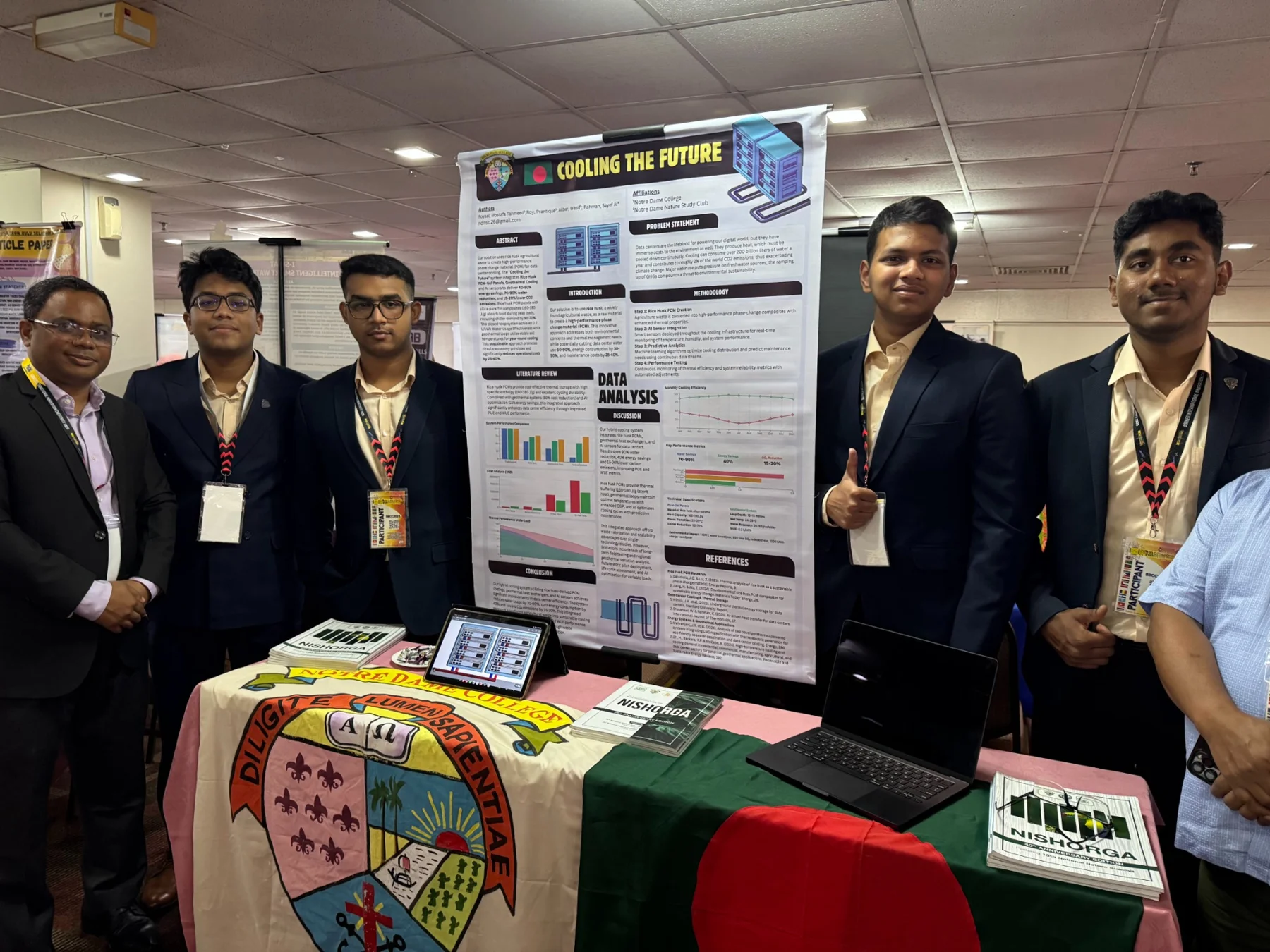
My team also won gold at the Borneo International Innovation Creativity Competition for “Cooling the Future,” a data-center cooling design (SDGs 9, 13).
Cooling the Future · Team project presentation at BIICC 2025
03 / Community contribution
Partnerships make it possible. Records make it accountable.
Our biggest responses ran on SDG 17: partnerships, from a ten-organization flood coalition to operational support I secured from Bangladesh's Ministry of Defence.
I also care about accountability (SDG 16). Student fundraising suffers from a trust problem, so I introduced a standard: each project page separates verified outcomes from fundraising goals, and we publish public donation and expenditure logs.
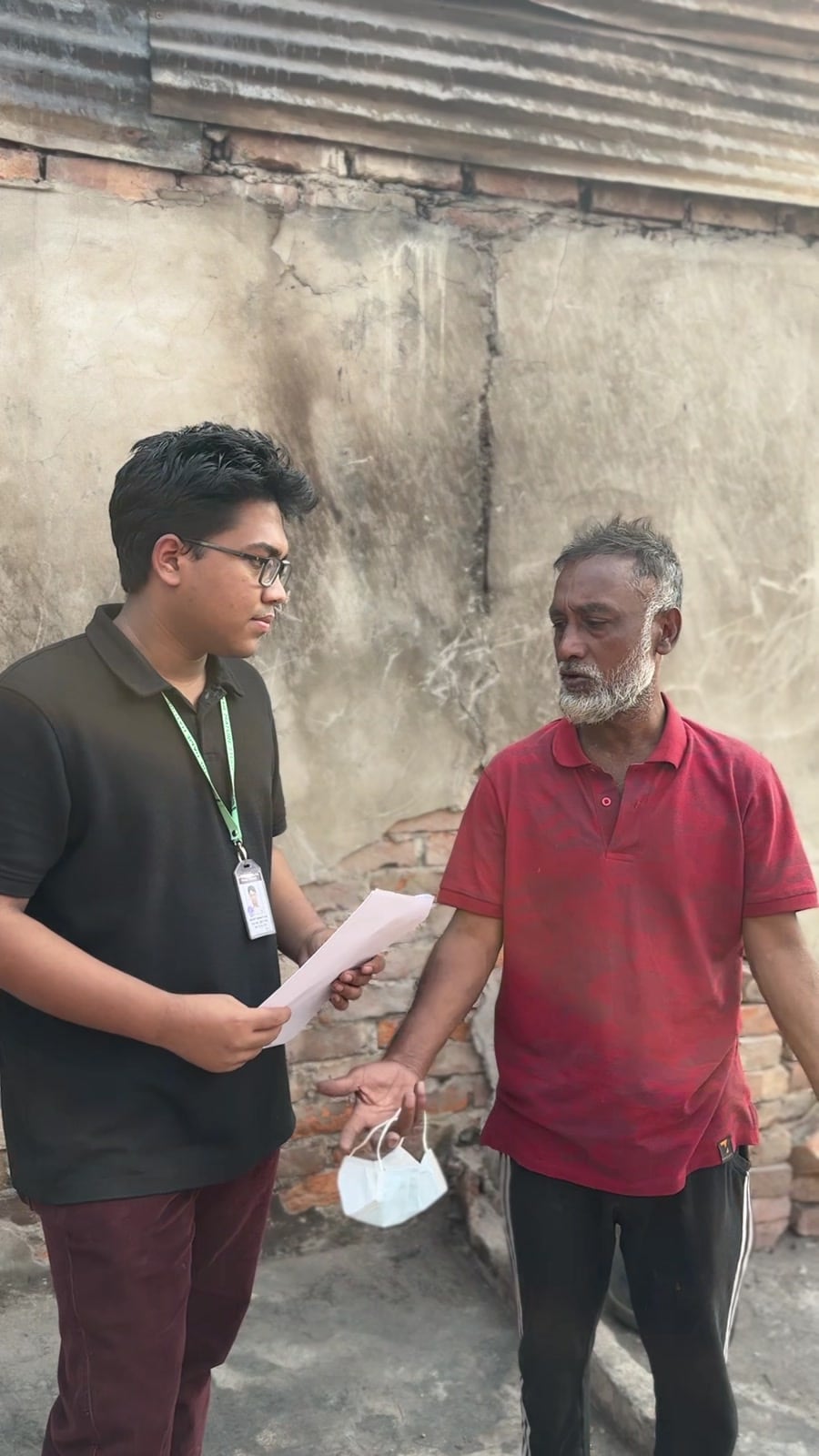
The Korail fire response taught me the most. Four organizations had collected mountains of donated clothes and were about to deliver four uncoordinated plans. I set up counted collection points on three campuses and worked with LEAF on the ground.
Then a woman held up a donated jacket and asked, flatly, whether anyone had brought rice. We had clothes and no rice.
Since then, needs assessment is the first step of every response, not the last.
05 / Long-term vision
Learn elsewhere. Bring it home.
My long-term goal is to combine research, technology and community action so humanitarian and education work becomes more evidence-based and accountable.
I want the summit to test my local experience against other systems: peers who have run SDG projects elsewhere, and frameworks for scaling pilots beyond 2030. In return, I bring frontline experience of floods, heat and fire in Bangladesh, and I will carry what I learn back to the volunteers who make our work possible.
What I hope to achieve or learn
Three things to carry forward.
01 / Scale & measure
Make the work repeatable.
Hashi Ekshathe has documented 13 initiatives and 3,000+ people reached, but we are still a volunteer-run, mostly local organization. I want to learn how other youth leaders turn one-off responses into repeatable programs with clear indicators, and how they win institutional support.
02 / Build partnerships
Find people to work with.
Our strongest results, from the Korail fire relief to the Chattogram flood coalition, came from working with other organizations. I hope to leave with concrete collaborators in disaster response, education and digital rights.
03 / Bring it home
Turn learning into a toolkit.
I will turn what I learn into a written toolkit for our eight divisional teams and share it with the student clubs and NGOs we already work with. I also want to test ideas from the summit on Amra Ekshathe, my early-stage platform connecting volunteers with NGO projects.